
“Growing older doesn’t mean breaking down. It means listening deeper.” — Lisa van Roode
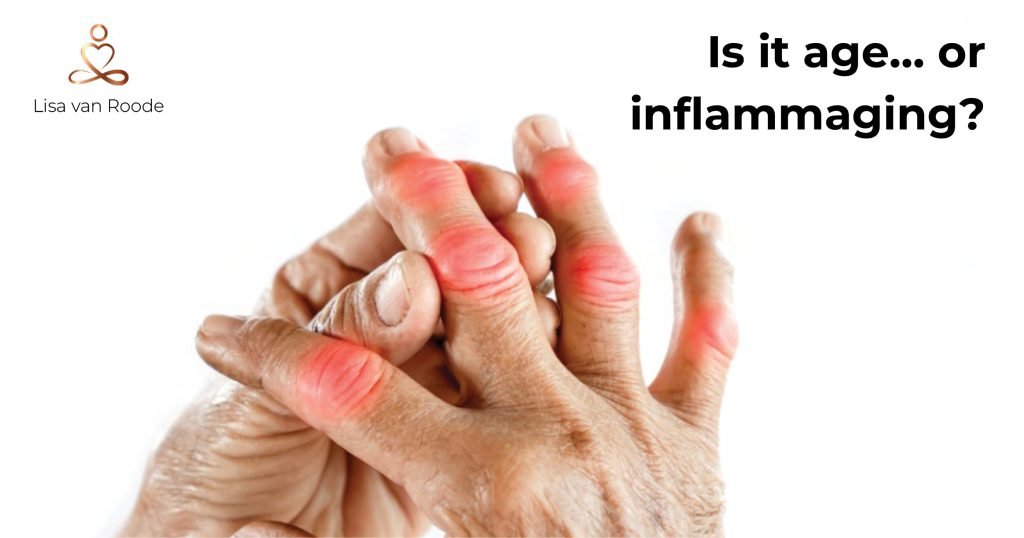
If you’re over 45 and feel like your body is working against you—with achy joints, constant fatigue, brain fog, or a persistent sense that your energy just isn’t what it used to be—you’re not imagining it. But here’s what’s often left out of the conversation: it may not be just about age. It could be inflammaging.
Let’s explore what that means—and what you can do about it.
What Is Inflammaging?
Inflammaging is a term researchers use to describe the chronic, low-grade inflammation that naturally increases with age. Unlike the acute inflammation you might see with injury or infection, this internal “slow burn” doesn’t produce swelling or fever—but it steadily contributes to many of the conditions most associated with aging: heart disease, cancer, dementia, diabetes, arthritis, and accelerated skin aging.
Over time, the immune system begins to lose its “off switch.” Inflammation, which is essential for healing wounds or fighting infections, becomes stuck in the “on” position. This constant activation begins to damage healthy tissues, hinder repair, and disrupt energy production at a cellular level.
Why Inflammaging Starts Before 50—and Escalates After 60
Studies show that inflammatory molecules—such as cytokines—begin to increase in the bloodstream around the age of 50, with a more significant rise after 60. At the same time, immune cells start to change. Some become what scientists call senescent cells: cells that have stopped dividing but won’t die. These so-called “zombie” cells release inflammatory signals that harm surrounding healthy cells, creating a feedback loop of inflammation.
Add to this the effects of telomere shortening (those protective caps on your DNA that fray with age), mitochondrial damage (which drains your energy), and declining resilience in your gut and brain—and you have the perfect storm for chronic breakdown.
But here’s the good news: this process can be slowed, and in many cases, reversed.
Inflammation Isn’t the Enemy. Losing Control Is.
One of the biggest myths about aging is that all inflammation is bad. But inflammation is a natural and necessary part of your body’s healing response. The issue isn’t inflammation itself—it’s the body’s loss of control over its regulation. Instead of switching on and off as needed, the inflammatory response stays active and slowly depletes your vitality.
This is why long-term use of anti-inflammatory drugs or steroids can backfire. While they may suppress symptoms temporarily, they don’t address the root cause and may weaken your immune system over time.
How to Regain Control of Your Body’s Inflammatory Response
Science now supports several lifestyle strategies that help address inflammaging by shifting your biology in a sustainable way:
- Make movement a daily habit.
Even 15 minutes of brisk walking each day can activate longevity genes, repair mitochondrial damage, and reduce inflammation. If you can do 30–45 minutes, even better. But remember—consistency matters more than intensity. - Emphasize a colorful, whole-food diet.
A Mediterranean-style diet—rich in olive oil, fish, whole grains, and vegetables—can lower inflammation markers. Aim for 7–10 different types of vegetables each week to nourish your gut microbiome, a key player in immune health. - Reduce cellular clutter.
As you age, your body accumulates senescent cells. Promising research shows that tools like Oberon quantum frequency technology may help clear these cells, supporting detoxification and cellular renewal. - Protect your telomeres.
Chronic stress, smoking, and poor sleep shorten telomeres and accelerate aging. Supporting your nervous system with practices like meditation, restorative sleep, and breathwork can help preserve cellular health. - Choose your supplements wisely.
Some supplements claim to support cellular stress regulators like NAD+. The best approach is to choose natural compounds that enhance your body’s own repair processes—and combine them with the lifestyle strategies above for optimal results.
If you’ve been told your fatigue, joint pain, or brain fog are “just part of getting older,” it may be time to take a second look. What if it’s not simply age? What if it’s inflammaging—and there’s something you can do about it?
Your body is always speaking. The question is: Are you ready to listen?
Feel free to reach out or message me for more information.