
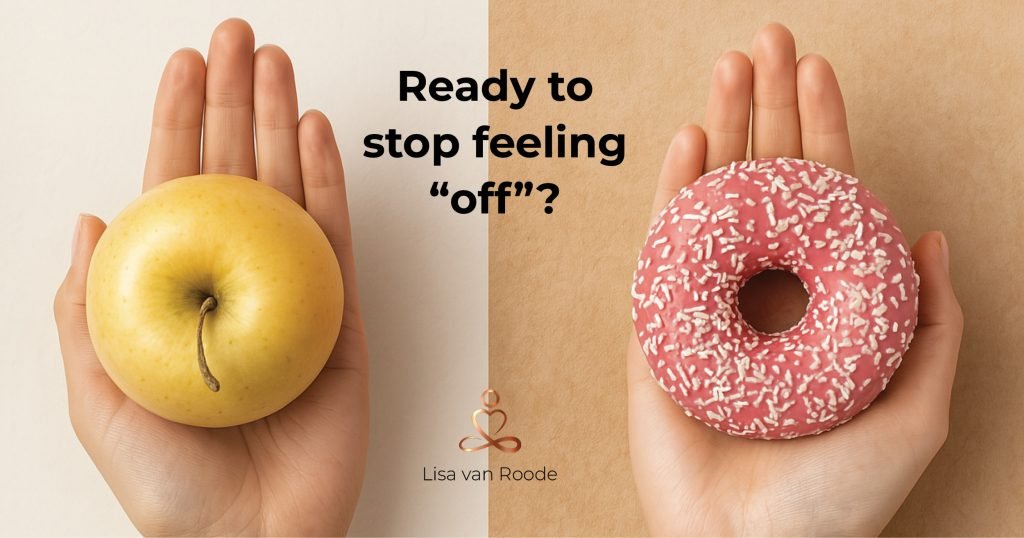
“Your body is always speaking to you. What you feed it either supports your healing—or your struggle.” – Lisa van Roode
If you’ve been feeling bloated, tired, foggy, inflamed, or simply not yourself, it’s time to take a closer look at what’s on your plate.
Many people believe they’re eating “healthy” because the label says low-fat, gluten-free, or organic. But in reality, they may be consuming ultra-processed foods disguised as nutritious choices.
Let’s explore the difference—and more importantly, what you can do to support your health through food.
What Are Whole Foods?
Whole foods are unprocessed, nutrient-rich foods that come directly from nature—foods your grandparents would recognize.
Examples include:
- Fresh vegetables and fruits
- Wild-caught fish, organic meat, and eggs
- Nuts, seeds, legumes
- Cold-pressed olive oil and avocados
- Herbs, spices
These foods are naturally rich in fiber, vitamins, enzymes, antioxidants, and minerals. They help your body restore energy, balance hormones, and reduce inflammation, especially important after age 40.
What About Processed Foods?
Not all processing is harmful. Cooking, freezing, fermenting, or drying food is still considered processing, but many of these forms retain nutritional value.
Tip: Check the ingredients list. If it’s short, recognizable, and closely resembles its original form, it’s likely fine.
What Are Ultra-Processed Foods?
Ultra-processed foods are highly modified, lab-formulated products. They’re stripped of natural nutrients and packed with additives, preservatives, emulsifiers, sugar, artificial flavors, and inflammatory oils.
Common examples include:
- Packaged breakfast cereals
- Flavored yogurts and plant-based milks with additives
- Snack bars, chips, cookies, and fast food
- Anything containing “vegetable oil,” “natural flavors,” or “soy protein isolate”
These foods overstimulate your taste buds, spike insulin levels, strain your liver, and disturb gut health. Over time, they may contribute to:
- Weight gain and insulin resistance
- Chronic inflammation (“inflammaging”)
- Hormonal imbalances
- Fatigue, mood swings, and brain fog
- Autoimmune flare-ups
- Higher risk of type 2 diabetes, heart disease, and cancer
A Wake-Up Call
Here’s the truth: your body cannot heal if it’s constantly battling the effects of what you eat. While ultra-processed foods are convenient, they are silently undermining your health.
The good news? You can change direction—fast.
Whole foods nourish your cells, calm your hormones, and support your metabolism. Your body responds quickly when it’s given what it needs.
Take the Next Step
If you’re ready to reset your metabolism and reclaim your energy, book a scan or join my next program. We’ll work directly with your biology to get real results.
What you put on your fork is either medicine or a slow poison.
This isn’t about perfection. It’s about powerful, informed choices—one meal at a time.
“Abundance begins in the body. Eat to support the life you want to live.” – Lisa van Roode